The nature of disruptive phenomena
Disruption is no longer an occasional event. It is the permanent condition. The technologies that define one economic era give way to the technologies of the next not over decades but over years — and the pace is accelerating.
The Bondo Foundation's research into disruptive phenomena begins with a deceptively simple question: what actually drives disruption, and what happens when the conditions for disruption are met? The answer has shaped every element of the Bondo Framework and every activity of the Foundation.
Disruption is not an external force that happens to economies and institutions. It is a consequence of structural conditions — conditions that can be identified, understood, and in some respects shaped.
Understanding disruption at this level of precision changes what a foundation, a government, an investor, or an entrepreneur can do in response to it. Reactive management of disruption — waiting for it to arrive and then responding — is increasingly inadequate. The window between the emergence of a disruptive technology and its dominance of a market has compressed from decades to years to, in some cases, months.
The acceleration of disruption
One of the most important findings from the Foundation's research into the history of disruptive technologies is the systematic compression of the adoption cycle. Running water took more than a century to reach strong market penetration. The landline telephone took a century. The automobile took six decades. The personal computer took two decades. The smartphone took less than a decade. Generative AI is moving faster still.
This compression has three critical implications.
For policy-makers
The gap between the emergence of a disruptive technology and the moment at which regulatory frameworks must apply to it is shrinking. Regulation designed for the previous technology applies to a world that no longer exists.
For investors
The window for early-stage investment in genuinely disruptive technologies is shorter than it has ever been. Missing the first cycle is increasingly likely to mean missing the market entirely.
For institutions
Institutions designed for a world of slow disruption — universities, public research bodies, regulatory agencies — are structurally misaligned with a world of fast disruption. The misalignment compounds.
For founders
The opportunity window for building a disruptive company in a new technology domain is real but time-limited. The infrastructure that would help founders reach the window is often not in place when they need it.
Artificial intelligence as the mother of disruptions
Artificial intelligence is not one disruptive technology among many. It is the enabling layer for all future disruptions — the platform on which the next generation of disruptive products, companies and markets will be built. Every future venture will use AI. Every future industry will be reorganised around it. The question is not whether this will happen but who will govern the platforms through which it happens.
It matters who owns the platform through which innovation is organised. It should not be owned and controlled by one individual, or one corporation.
The Bondo Foundation was created, in part, to ensure that the digital infrastructure of the European innovation ecosystem is governed in the interests of Europe's economy and society — ethically, responsibly, safely, securely, equitably and accountably.
The Foundation's research into disruptive phenomena directly informs the design of bondo.ai. An Innovation Operating System that does not understand the dynamics of disruption — the pace, the structural conditions, the points of leverage — would be at best incomplete and at worst counterproductive. The research and the platform are designed together, not separately.
The Bondo Framework for managing disruption
The Foundation's research has produced what we call the Bondo Framework — an analytical apparatus for understanding disruptive phenomena and designing interventions that shape their effects. The Framework is not a theory of disruption in the abstract. It is a tool for practitioners: for policy-makers, investors, founders and institutions who need to make decisions under conditions of accelerating change.
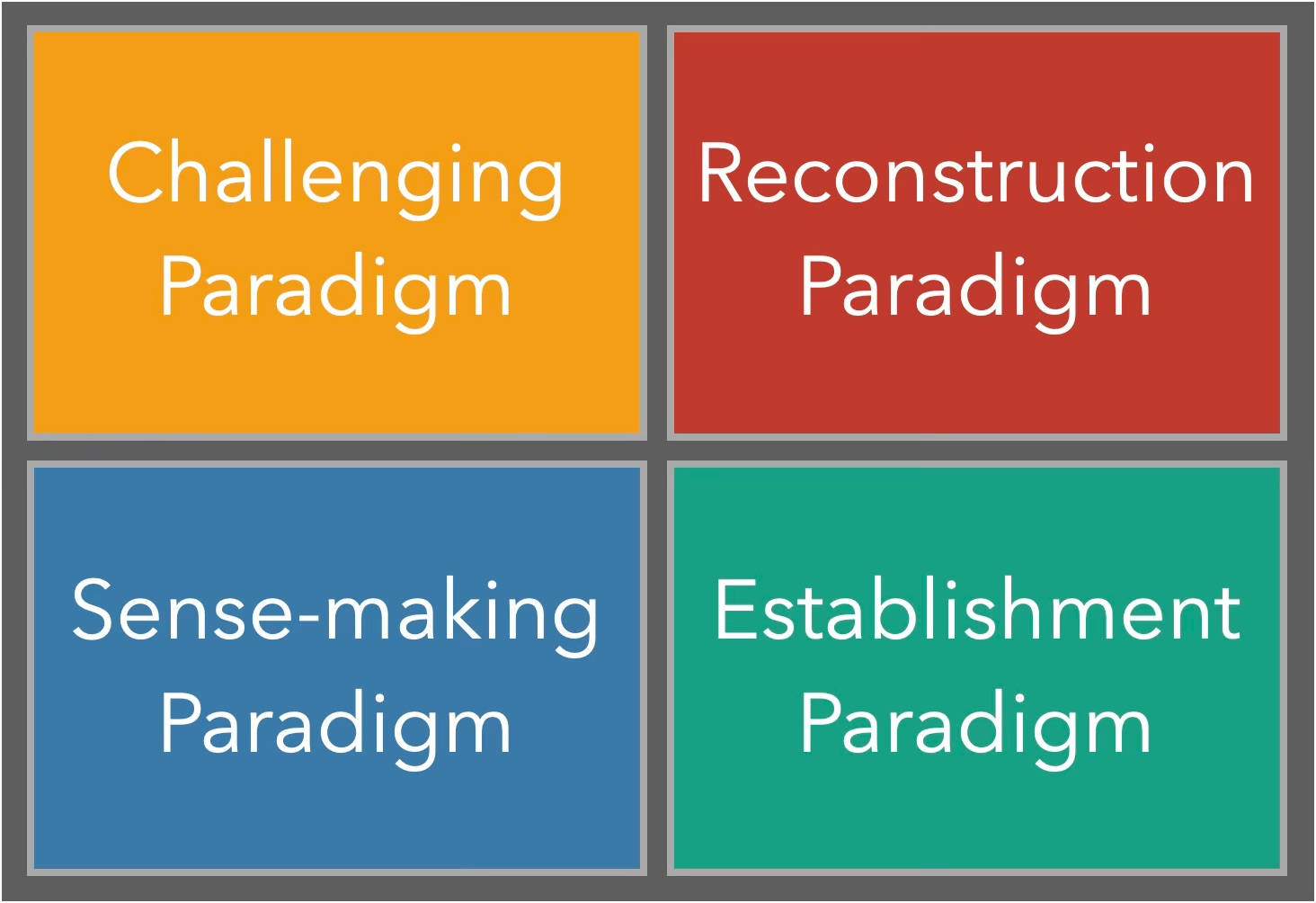
The Framework's core insight is that disruption, though often experienced as sudden, is in fact the visible consequence of long-running structural changes in the invisible subsurface of the innovation ecosystem. The Innovation Iceberg, the selection failures documented in our unicorn research, the capital structure documented in our Source Capital research — these are not independent phenomena. They are interconnected expressions of the same underlying structural conditions.
An intervention that addresses only one of these conditions — capital alone, infrastructure alone, or policy alone — will achieve limited results. The Bondo Framework is designed to address the system as a whole.
Governing disruption ethically
Not all disruption produces positive outcomes. Disruption that is ungoverned, or governed in the interests of a small number of actors, can produce harm at scale. The Foundation's research into disruptive phenomena is explicitly oriented toward understanding how the effects of disruption can be managed to create positive, lasting change rather than harm.
The six principles that govern the Foundation's work — Ethical, Responsible, Safe, Secure, Equitable, Accountable — are not decorative. They are the direct consequence of what the research shows about what happens when powerful disruptive technologies are deployed without these guardrails.